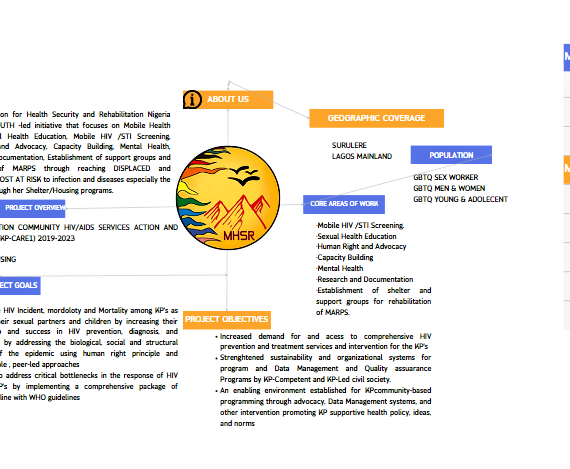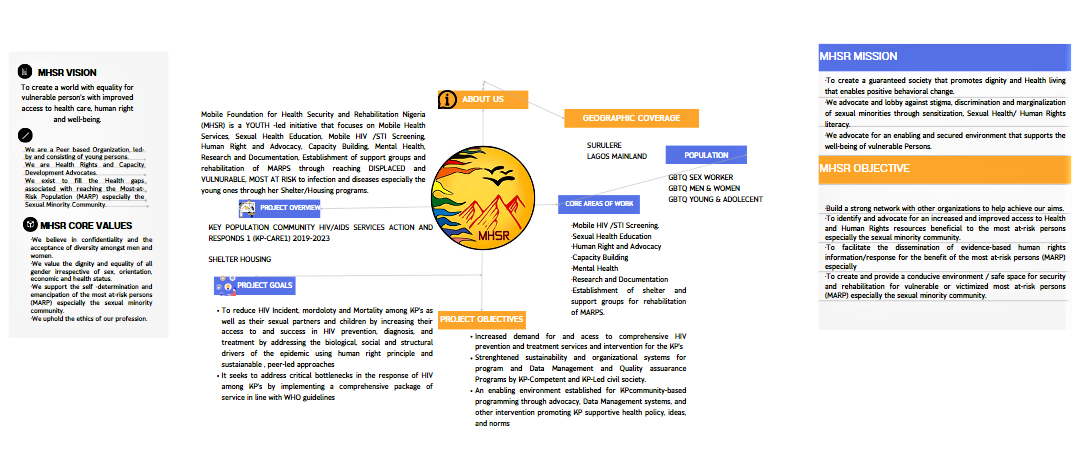


The Iwosan Research Project is an initiative led by BSGH in partnership with MHSR, designed to generate evidence-based insights that inform inclusive health interventions for marginalized populations. The project focuses on strengthening research capacity and producing actionable data to improve health outcomes among underserved communities, particularly those facing systemic, social, and structural barriers to care.
This research program prioritizes populations living in urban slums, men who have sex with men (MSM), women and girls, and people living with HIV. These groups often experience limited access to quality healthcare services due to stigma, discrimination, poverty, and inadequate infrastructure. By centering their experiences, the project aims to address critical gaps in knowledge and service delivery.
The Iwosan Research Project will employ a mixed-methods approach, combining quantitative data collection with qualitative insights to better understand health behaviors, service utilization patterns, and barriers to care. Community engagement will be a core component of the research process, ensuring that participants are not only subjects but active contributors to the design, implementation, and dissemination of findings.
Through strategic collaboration between BSGH and MHSR, the project will also build local research capacity, support policy advocacy, and contribute to the development of targeted, culturally responsive interventions. Ultimately, the Iwosan Research Project seeks to drive sustainable improvements in public health systems and promote equity in healthcare access for marginalized communities.